Travel · How it works · Frequent flyer
How to Actually Sleep on a Plane
By Jake · 4 August 2026 · 7 min read
Sleeping on a plane is a skill, not a lottery - and like any skill, it's mostly preparation. After more flights than I'd care to count, I've learned that the difference between landing wrecked and landing human comes down to a handful of small decisions, most of them made before you even sit down. Here's what actually works.
Win the seat
This is the whole game. Pick a window seat, ideally ahead of the wings (smoother, quieter) and away from the galley and toilets (traffic and light all night). The window gives you a wall to lean on and control of the blind - and, crucially, nobody has to climb over you. The number one killer of plane sleep isn't noise or comfort, it's the aisle neighbour needing out every ninety minutes. Be the one by the window.
Set your body to the destination
The moment you board, put your watch on destination time and decide whether this is a “sleep” flight or a “stay awake” one. Then commit. Go easy on alcohol (it wrecks the quality of what sleep you do get) and caffeine, eat lightly, and drink water - cabin air is brutally dry and dehydration makes everything worse. Aligning to where you're going, rather than where you are, is the single best thing you can do about jet lag.
The kit that earns its place
You don't need much, but the right small stuff is transformative (I keep most of it in my carry-on anyway - see my travel gadgets list):
- A contoured eye mask - one that blocks light without pressing on your eyes. Darkness tells your brain it's bedtime, even at 2pm.
- Earplugs or noise-cancelling headphones - kill the engine drone. Earplugs win for actual sleep; headphones are bulky to nod off in.
- A packable or inflatable pillow - I travel light, so inflatable it is: not perfect, but it packs to nothing and stops the dreaded forward head-loll.
- A layer - planes run cold, and a hoodie doubles as a blanket, a lumbar cushion, or a window wedge.
- Melatonin (if it suits you) - a small, well-timed dose can help nudge you off on a long-haul.
- Mouth tape - hear me out: it encourages nasal breathing and keeps things closed. A genuine, if slightly ridiculous, upgrade to both sleep and dignity. Only if you breathe easily through your nose.
Set up the seat
- Recline a touch (mind the person behind), and support your head so it doesn't fall forward - lean into the window with your layer as a wedge.
- Belt over the blanket. Fasten your seatbelt visibly on top of your blanket so the crew don't have to wake you during turbulence to check.
- Shoes off, socks on. Your feet swell at altitude; loosen up and bring a clean pair of socks.
- Face the window, not the aisle - away from the trolley lights and the corridor traffic.
Accept “rest” over “sleep”
Here's the mindset shift: even if you don't fully drop off, lying still with your eyes covered and the noise gone is genuinely restorative. Don't fight it or check the map every ten minutes - put the screen away, slow your breathing, and let rest be enough. Deep sleep, if it comes, is a bonus.
The short-haul reality
On a short early hop, you're not getting a full night - you're stealing what you can. And some airlines are not exactly on your side (I've said my piece about bright cabins and the ever-present cart). Mask on, earplugs in, lean into the window, and take the twenty minutes. It counts.
Landing human
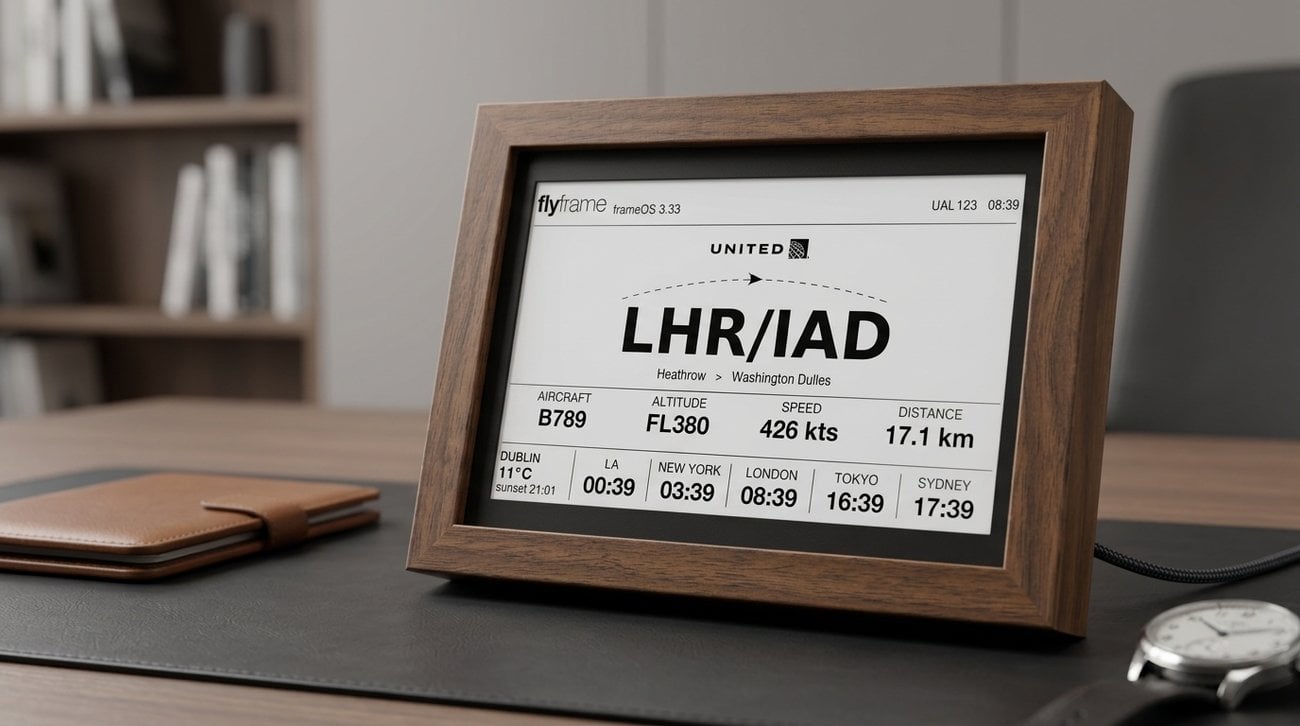
Do a few of these and you step off genuinely rested instead of running on fumes - which, for me, is the whole point of getting good at flying. And the nicest part of the trip is the bit you can keep at home: a FlyFrame quietly showing the aircraft passing over your house, long after you've unpacked. Sky in a box. For the rest of the carry-on, my gadgets I never fly without has you covered.
Frequently asked questions
- What's the best seat to sleep on a plane?
- A window seat, ideally ahead of the wings and away from the galley and toilets. The window gives you something to lean on and control over the blind, and nobody has to climb over you - the single biggest cause of interrupted plane sleep is being the aisle or middle passenger.
- How do you sleep on a plane without a neck pillow?
- Lean into the window with a rolled-up hoodie or a layer as a wedge, or use an inflatable pillow that packs to nothing. The goal is to stop your head from lolling forward - that's what causes the neck ache. Even a jacket bunched against the window wall works in a pinch.
- Does mouth tape help you sleep on a plane?
- Some people swear by it: a small strip encourages nasal breathing, which can mean quieter, more settled sleep (and a little more dignity than the mouth-open slump). It's not for everyone - only try it if you can breathe comfortably through your nose.
- How do I avoid jet lag?
- Set your watch to the destination time when you board and try to sleep according to it, get daylight at the right end of the journey, go easy on alcohol and caffeine, and drink plenty of water. You'll never beat it completely, but aligning your sleep to where you're going helps a lot.
Keep reading
The Travel Gadgets I Never Fly Without (150+ Flights a Year)
A frequent flyer's honest carry-on kit - the ten travel gadgets and accessories I never go to the airport without, from a power bank and a Bluetooth IFE adapter to the small stuff that actually helps you sleep.
The Best Gifts for a Frequent Flyer
Shopping for someone who's always on a plane? The best gifts for a frequent flyer - the kit that makes a life in the air smoother, and the one that brings the sky home between trips.
The Best Duffle Bags: Durable, Stylish Weekenders (2026)
The best duffle and weekender bags for travel: durable, stylish, mostly leather - the LV Keepall, Rimowa Never Still, Filson, Ghurka, Bennett Winch and made-in-USA picks.
How to Care for Your Aluminium Rimowa (and Whether to Cover It)
A hands-on guide to caring for an aluminium Rimowa: how to remove scuffs and transfer marks, the truth about dents and patina, the plastic-cover debate, and looking after the wheels and leather handles.