Plane spotting · Travel · Airports
The Best Plane-Spotting Airports in the World
By Jake · 17 August 2026 · 8 min read
Some airports are destinations in their own right. Whether it's a beach where jets skim the sand, a grassy mound under the approach, or a terrace built for the purpose, the world's great plane-spotting locations turn watching aircraft into a genuine day out. Here's our tour of the best, and how to make the most of each.
Maho Beach - Princess Juliana International, St Maarten (SXM)
The most famous of them all. The runway begins right at the edge of Maho Beach, so arriving aircraft pass just overhead on short final - close enough to feel the air move. It's a bucket-list moment for any spotter. Check the day's heavy arrivals in advance so you're on the sand when the big widebodies come in, and mind the jet blast behind the fence on departure - it is no joke.
Myrtle Avenue & the terraces - London Heathrow (LHR)
Heathrow is a spotter's paradise thanks to relentless long-haul traffic. Myrtle Avenue, a small park under the approach to the northern runway, is the legendary spot for landing shots, and the hotels and viewing areas around the airport give you every heavy in the world across a single afternoon. On westerly operations you'll catch A380s and 777s streaming in minutes apart.
Imperial Hill & In-N-Out - Los Angeles (LAX)
LAX offers two spotting institutions. Imperial Hill (Clutter's Park) gives a sweeping view across all four runways, while the In-N-Out on Sepulveda Boulevard sits directly under the approach - burgers and belly shots in one stop. It's one of the busiest, most varied spotting cities on earth.
Panorama Terrace - Amsterdam Schiphol (AMS)
Schiphol built a spotter a home: the Panorama Terrace at the terminal is free, high, and looks straight out over the apron and runways. For something wilder, the distant Polderbaan runway has its own viewing spot where aircraft seem to land in the middle of the fields. A brilliant, family-friendly day.
Skiathos (JSI), Greece - “Europe's Maho”
A short runway hard against a road and the sea means aircraft come in low over the heads of onlookers, earning Skiathos its nickname. Smaller jets and turboprops make up much of the traffic, but the drama of the approach - and the departures - rivals anything in the Caribbean.
Gibraltar (GIB) - the runway that crosses a road
Gibraltar's single runway intersects the main road onto the peninsula, so traffic (and pedestrians) stop every time an aircraft lands or departs. Watching cars wait at a level crossing for a jet is a genuinely surreal sight, all in the shadow of the Rock.
Barra (BRR), Scotland - the beach runway
The only airport in the world with scheduled flights onto a tidal beach. The runways are marked by wooden poles, the schedule follows the tide, and a little Twin Otter drops onto the sand. It's remote, weather-dependent and utterly unforgettable.
Paine Field - Everett, USA
Home to Boeing's widebody assembly, Everett is where brand-new 777s and 787s take their first flights and where test aircraft come and go. For anyone fascinated by how the big jets are actually built, it's hallowed ground.
The one that got away - Kai Tak, Hong Kong
No list is complete without a nod to the late, legendary Kai Tak, where jumbos threaded between apartment blocks on the famous “checkerboard” approach before the airport closed in 1998. You can't spot there any more, but every spotter knows the photos - the gold standard of dramatic approaches.
Making the most of a spotting trip
Wherever you go, a few things help: check the wind, because it decides which direction aircraft land and which spot to be at; bring binoculars and something to zoom with; and use a flight tracker to see what's inbound so you're ready for the good ones. If you're still learning the types, our guide to telling what plane is overhead will get you fluent fast. And if you're assembling kit, see our gadgets for avgeeks.
Bring the feeling home
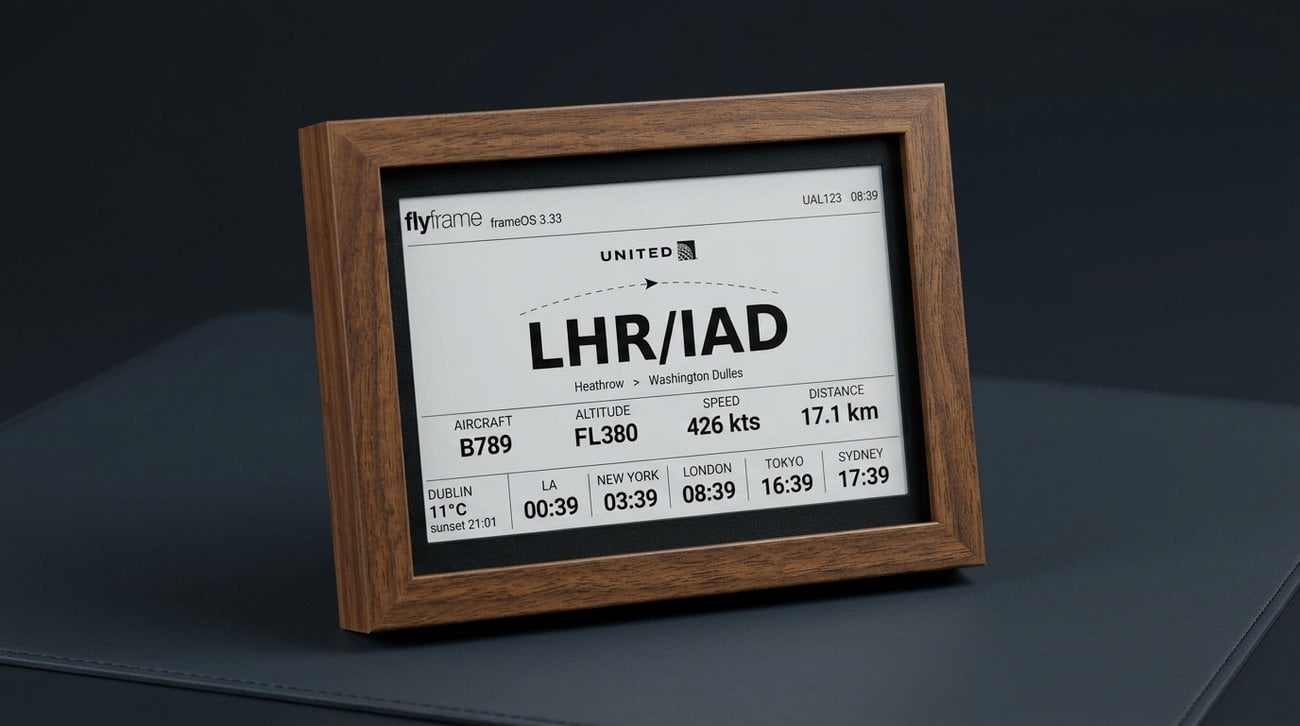
The best part of a great spotting airport is the constant sense of anticipation - what's coming in next, and from where? You can keep a little of that at home between trips. A FlyFrame shows the real aircraft crossing your own sky in real time on a calm e-ink display - the airline, the route, the altitude - so the game you love at the fence carries on, on your wall, every day. It's the closest thing to a viewing terrace in the living room.
Frequently asked questions
- What is the most famous plane-spotting spot in the world?
- Maho Beach at Princess Juliana International Airport in St Maarten is the most famous of all - aircraft pass just metres over sunbathers' heads on final approach to the beach-side runway. It's the one photo every plane spotter recognises, and the closest most people will ever stand to a landing widebody.
- Where can I watch planes land really close up?
- The classics for close-up landings are Maho Beach (St Maarten), Skiathos in Greece (often called Europe's Maho), and the approach to St Barths for the truly brave. For big jets, Myrtle Avenue at London Heathrow and Imperial Hill near Los Angeles put you right under the approach path without leaving dry land.
- Do I need special gear to go plane spotting?
- No - your eyes and a phone are enough to start. To go further, a decent pair of binoculars, a camera with a zoom lens, and a flight-tracking app to identify what's inbound will transform a session. Our beginner's guide covers the basics, and a good airport with a viewing area does most of the work for you.
- How do I know what aircraft I'm looking at?
- Between the airline livery, the number of engines and the tail shape you can identify most types with a little practice - and a flight tracker fills in the rest, showing the flight number, route and aircraft type in real time. At home, a wall-mounted flight tracker keeps that same game going every day, long after the trip.
Keep reading
The Best Duffle Bags: Durable, Stylish Weekenders (2026)
The best duffle and weekender bags for travel: durable, stylish, mostly leather - the LV Keepall, Rimowa Never Still, Filson, Ghurka, Bennett Winch and made-in-USA picks.
How to Care for Your Aluminium Rimowa (and Whether to Cover It)
A hands-on guide to caring for an aluminium Rimowa: how to remove scuffs and transfer marks, the truth about dents and patina, the plastic-cover debate, and looking after the wheels and leather handles.
Plane Spotting for Beginners: How to Start Watching the Skies
New to plane spotting? A friendly beginner's guide - how flights are tracked, what the callsigns and types mean, the gear you actually need, and how to identify the aircraft passing over your own home.
How to Tell What Plane Is Flying Over Your House
Wondering what that aircraft overhead is? Here are the three ways to identify any plane flying over your house - a tracking app, an always-on display, or your own eyes - and what the details mean.