Learning to fly · Careers
Is It Too Late to Learn to Fly? Learning to Fly as an Adult
By Jake · 28 October 2026 · 7 min read
A lot of people who love planes assume flying is for people who started young. It isn't. Flying clubs are full of people who took their first lesson at 35, 50 or 68, and plenty of airline pilots changed career after a decade doing something else. If you have ever watched a plane go over and thought “I wish”, this is for you.
Rules differ by country and change over time. This guide is based on European and UK rules; check the details with your national aviation authority and your chosen school.
Flying for fun: the private licence
Most adults start with a private pilot licence (PPL), which lets you fly light aircraft for pleasure, take friends and family, and go touring. In Europe there is also the lighter LAPL (light aircraft pilot licence), with fewer minimum hours and some limits on what and where you fly.
- Flying: at least 45 hours of training for the PPL (30 for the LAPL), including solo flights and a solo cross-country. Most people need more than the minimum.
- Theory: exams on air law, meteorology, navigation, principles of flight, human performance and more. Plenty of people enjoy this part more than they expected.
- Skills test: a flight with an examiner at the end.
Fitting lessons around work and the weather, adults commonly take several months to a year or more. That is completely normal. Flying a little every week or two keeps the skills fresh and the cost manageable.
The medical
You will need a medical certificate before you fly solo: a Class 2 medical for the PPL, or the simpler LAPL medical for the LAPL. Many conditions that come with age (glasses, controlled blood pressure, many common medications) are compatible with flying, sometimes with limitations. If you are unsure, book the medical before you spend much on lessons. It answers the question quickly.
What about age and learning speed?
Younger students sometimes pick up the hand flying a little faster. Adults usually make up for it with patience, judgement and better study habits, which matter more in the long run. The best predictor of success isn't age, it is flying regularly.
Changing career to airline pilot
It is genuinely possible. Airline flying in Europe is allowed up to 65, so starting in your 30s or 40s still leaves a long career. The route is the same as for school leavers (see how to become a pilot): a Class 1 medical first, then integrated or modular training to a commercial licence with the airline theory, then airline selection.
The honest hurdles are money and time: training is expensive and usually means a period without full income. The modular route, which you can do alongside a job, is popular with career changers for exactly that reason. Talk to people who have done it; flying clubs and online pilot forums are full of them.
Other ways into the air
- Gliding: pure flying, a friendly club culture and usually cheaper per flight. Many gliding clubs teach adults of every age.
- Microlights: light, simple aircraft with their own licences, a popular route for the hobby.
- Simulators: not a licence, but a great way to learn procedures, practise and stay sharp between lessons.
How to start this month
- Find flying clubs and schools within an hour of home and read their reviews.
- Book a trial lesson. You will take the controls with an instructor on the first flight.
- If you loved it, book the medical.
- Start the theory at home while you fly every week or two.
Keep the spark between lessons
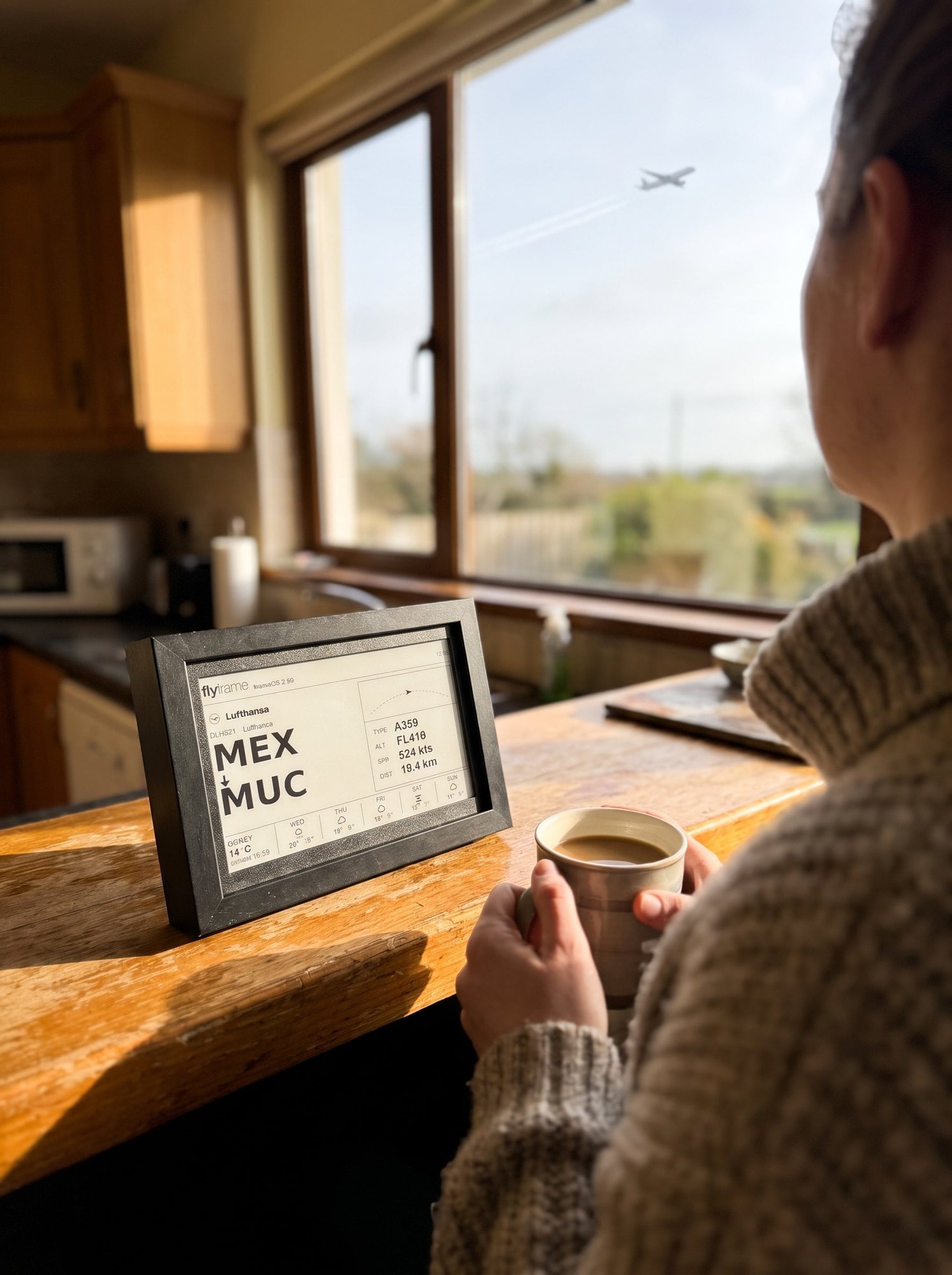
Between lessons, it helps to stay connected to what's flying. Learn the aircraft types that pass over your house, the routes and the airlines; our guide on identifying the planes overhead is a good start. A FlyFrame on the wall does this for you quietly all day, showing each real aircraft as it passes, where it's from and where it's going.
It isn't too late. The best time to start was years ago; the second best time is the next clear morning.
Frequently asked questions
- Is there an age limit for learning to fly?
- There is no upper age limit for a private pilot licence in Europe or the UK. What you need is to pass the medical for the licence you want and the training itself. People regularly learn to fly in their 40s, 50s, 60s and beyond.
- How long does it take to get a private pilot licence?
- European rules require at least 45 hours of flight training for a private pilot licence for aeroplanes (30 for the lighter LAPL), plus theory exams and a skills test. Most adults take longer than the minimum, often several months to a year or more fitting lessons around work and weather.
- Can you become an airline pilot later in life?
- Yes, many airline pilots changed career in their 30s and 40s. Airline flying in Europe is allowed up to age 65, so a career that starts at 40 can still run for decades. Training cost and time away from income are the real hurdles, not age.
- What is the best first step to learning to fly?
- Book a trial lesson at a local flying club or school. You will take the controls with an instructor, see whether you enjoy it, and get a feel for the club. If you are serious, the next step is the medical.
Keep reading
How to Become a Pilot: A Step-by-Step Guide from School to Cockpit
Want to fly for an airline? The real path, age by age: school subjects, the medical, training routes, costs and what teens can do now. Written for Ireland, the UK and Europe.
Aviation Careers Beyond the Cockpit: 12 Jobs for People Who Love Planes
Love planes but not sure about being a pilot? Air traffic control, aircraft engineering, aerospace design, dispatch, meteorology, cabin crew and more, with how to get in.