Kids & STEM · Family · Plane spotting
10 Plane Spotting Games for Kids (No Airport Needed)
By Jake · 28 October 2026 · 6 min read
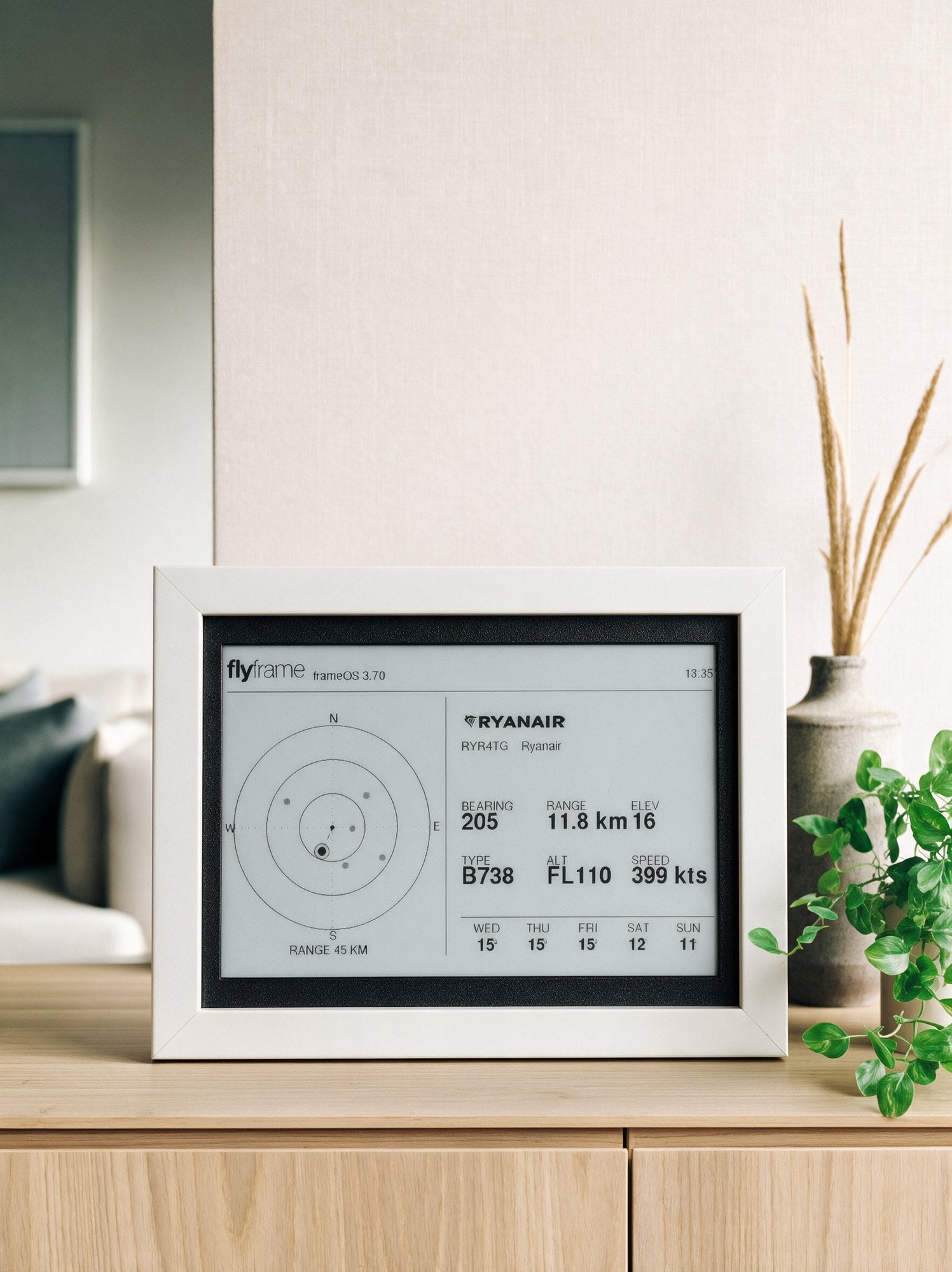
You don't need an airport, a camera or a big lens to have fun with planes. If they pass over your home, you have everything you need. These games work in the garden, at the kitchen window or on the walk to school, and most take less than a minute. For each one, it helps to have a way to see what the plane actually is: a flight-tracking app, or a display that does it for you (see how to tell what plane is flying over your house).
1. Guess the destination
Someone spots a plane. Everyone guesses where it is going, then you check. Closest guess wins. It is the simplest game and the one kids ask for again and again, because the answer is often somewhere surprising.
2. Find it on the map
Keep a world map or a globe near the window. After each flight, put a finger on where it started and where it is heading. Bonus points for naming the country, the language or something you could eat there.
3. Sky passport
Draw a simple passport with blank pages. Every new destination a plane over your house is flying to earns a stamp (a drawing, a sticker, or the three-letter airport code). It's a long game: watch the places add up over weeks. FlyFrame's Kids mode keeps a sky passport automatically and shows a stamp when a plane heads somewhere new.
4. Plane bingo
Make a 3 by 3 grid with things to spot: a plane with four engines, a plane going to a country that starts with S, a contrail, a propeller plane, a plane from a foreign airline, a plane going somewhere hot. First to a line wins. Swap cards each week.
5. How high is it?
Big numbers are hard. Comparisons are fun. A cruising airliner is more than 30 Eiffel Towers up, and flying many times faster than a cheetah. Ask the kids to invent their own units: how many school buses high? How many of our houses? This sneaks in a surprising amount of maths.
6. Sticker collector
Pick a set of aircraft types to collect: Airbus A320, Boeing 737, Boeing 787, ATR 72 turboprop, and the rare ones like a jumbo jet, an A380 or a cargo plane. Each new type earns a sticker. Learning to tell them apart (engines, wingtips, the shape of the nose) is a proper spotter skill.
7. Where is it now?
Pick a flight you saw in the morning and check on it at bedtime. Has it landed? Is it on its way back? Kids love the idea that the plane they waved at is now on the other side of the world.
8. Make up the story
For younger children: who is on the plane? A family going on holiday, a football team, a parcel for someone's birthday? Where will they go first when they land? It turns a dot in the sky into characters and a plot.
9. Count before dinner
How many planes can you spot in ten minutes? Write it on the fridge and see if you can beat it tomorrow. Try different times of day: mornings and evenings are often busier than you expect.
10. Contrail weather forecast
Watch the white trails. Do they vanish quickly or spread across the sky? Long-lasting contrails mean the air up high is cold and moist, which can hint at a change in the weather. Our explainer on what contrails are has the science.
Tips to keep it fun
- Little and often beats a big planned session.
- Let the child lead: if they only care about the A380, go with it.
- Grown-ups play too. It is surprisingly addictive at any age.
- Want more? Start with plane spotting for beginners or our guide to getting kids interested in planes.
Frequently asked questions
- What are good plane games for kids?
- Guess the destination, plane bingo with aircraft types and airlines, counting planes before dinner, a sky passport of places spotted, and 'how high is it?' comparison games all work well. They need nothing more than the sky and, ideally, a way to look up what each plane is.
- How do I find out where a plane overhead is going?
- Use a flight-tracking app on your phone, or a dedicated display like FlyFrame that shows the plane passing over your home, its airline and where it is flying from and to, automatically.
- Are plane spotting games educational?
- Yes. Destinations teach geography, comparisons teach measurement and number sense, recognising aircraft types builds observation skills, and talking about time zones and weather brings in science.
Keep reading
How to Get Your Child Interested in Planes and Flying
Simple, screen-light ways to turn the planes over your house into a love of flying, geography and science, for toddlers to teens (and curious grown-ups).
Gifts for a Plane-Mad Kid That Teach Something (2026)
For the child who points at every plane: gifts that feed the obsession and teach geography and science, from model kits to a live flight tracker.
How to Become a Pilot: A Step-by-Step Guide from School to Cockpit
Want to fly for an airline? The real path, age by age: school subjects, the medical, training routes, costs and what teens can do now. Written for Ireland, the UK and Europe.
Aviation Careers Beyond the Cockpit: 12 Jobs for People Who Love Planes
Love planes but not sure about being a pilot? Air traffic control, aircraft engineering, aerospace design, dispatch, meteorology, cabin crew and more, with how to get in.